Agregátor RSS
Shai Hulud attack ships signed malicious TanStack, Mistral npm packages
Hundreds of packages across npm and PyPI have been compromised in a new Shai-Hulud supply-chain campaign delivering credential-stealing malware targeting developers. [...]
Kategorie: Hacking & Security
SAP fixes critical vulnerabilities in Commerce Cloud and S/4HANA
SAP has released the May 2026 security updates addressing 15 vulnerabilities across multiple products, including two critical flaws in the Commerce Cloud enterprise-grade e-commerce platform and the S/4HANA ERP suite. [...]
Kategorie: Hacking & Security
Chytrá čistička vzduchu Philips zlevnila na minimum. Je tichá, výkonná a uživatelé jsou z ní nadšení
Chytrá čistička vzduchu Philips 2000 Series AC2220 zlevnila o 25 % na 4499 Kč. • Má krásný design, vysoký výkon a velmi tichý chod. • Kromě toho se umí spojit s mobilem, v noci svítí a snadno se udržuje.
Kategorie: IT News
Why Agentic AI Is Security's Next Blind Spot
Agentic AI is already running in production environments across many organizations today. It is executing tasks, consuming data, and taking actions — most likely without meaningful involvement from the security team. The industry conversation has largely framed this as a question of policy: allow it, restrict it, or monitor it? However, that framing misses the point.
The more urgent
Kategorie: Hacking & Security
Why Agentic AI Is Security's Next Blind Spot
Agentic AI is already running in production environments across many organizations today. It is executing tasks, consuming data, and taking actions — most likely without meaningful involvement from the security team. The industry conversation has largely framed this as a question of policy: allow it, restrict it, or monitor it? However, that framing misses the point.
The more urgent [email protected]
Kategorie: Hacking & Security
Apple, Google drag cross-platform texting into the encrypted age
Apple and Google have taken a big step toward securing cross-platform texting, ending years of messages bouncing around in glorified plaintext. Apple announced this week that encrypted Rich Communication Services (RCS) messaging is rolling out in beta for iPhone users running iOS 26.5 and Android users on the latest version of Google Messages. The feature works across supported carriers and adds end-to-end encryption to cross-platform chats that were still taking the scenic route through carrier-era messaging infrastructure. Users will know it's enabled when a lock icon appears in RCS conversations. Apple says E2EE RCS messages cannot be read while traveling between devices, bringing Android-to-iPhone chats closer to the protections offered by WhatsApp and Signal. The move lands as other platforms head in the opposite direction. Earlier this month, Meta confirmed it was backing away from parts of its encryption rollout for Instagram DMs, telling The Register that "very few" people actually used the feature and suggesting privacy-minded users head over to WhatsApp instead. Apple, meanwhile, appears content to lean harder into the privacy angle, finally plugging one of the more obvious holes in modern messaging security. That gap has been hanging around for years. While iMessage chats between Apple devices were already encrypted, conversations involving Android phones could fall back to SMS or unencrypted RCS, depending on carrier support. Google had offered encrypted RCS chats inside Google Messages for years, but only when both sides used Google's ecosystem. Apple joining the party means cross-platform RCS encryption is finally starting to span the two largest mobile ecosystems. The rollout is still marked as beta, and carrier support varies by region, so not everyone will get encrypted chats immediately. UK availability remains unclear for now, as none of the major UK networks currently appear on Apple's published compatibility lists for the feature. Still, after two decades of the mobile industry insisting that interoperability and security could not coexist, cross-platform texting may finally be catching up with the rest of modern messaging. ®
Kategorie: Viry a Červi
Hackeři mohli sledovat dětské pokoje po celém světě. Kamery posílaly snímky bez adekvátního zabezpečení
** Platforma Meari umožňovala přístup k více než milionu chůviček a kamer ** Útočníci díky tomu mohli nepozorovaně stahovat citlivé snímky cizích dětí ** Ochranou proti těmto hrozbám je pouze úplné fyzické odpojení zařízení
Kategorie: Hacking & Security
Hackeři mohli sledovat dětské pokoje po celém světě. Kamery posílaly snímky bez adekvátního zabezpečení
Platforma Meari umožňovala přístup k více než milionu chůviček a kamer • Útočníci díky tomu mohli nepozorovaně stahovat citlivé snímky cizích dětí • Ochranou proti těmto hrozbám je pouze úplné fyzické odpojení zařízení
Kategorie: IT News
Instructure reaches 'agreement' with ShinyHunters to stop data leak
Instructure, the edtech giant behind the widely popular Canvas learning management system (LMS), has reached an "agreement" with the ShinyHunters extortion group to prevent the data stolen in a recent breach from being leaked online. [...]
Kategorie: Hacking & Security
Konference Den IPv6: program je na webu, registrujte se
Na webu konference Den IPv6 2026, která se uskuteční 4. června v Národní technické knihovně v pražských Dejvicích, je nyní k dispozici kompletní program této tradiční akce věnované tématům spojeným s protokolem IPv6. Na celodenní pásmo přednášek je třeba se přihlásit a zaplatit účastnický poplatek 242 korun. Registrační formulář najdou zájemci opět na webu akce. Konferenci Den IPv6 2026 organizují i letos společně sdružení CESNET, CZ.NIC a NIX.CZ.
Kategorie: GNU/Linux & BSD
Logitech chystá novou cestovní myš. Má trackpad a zlomí se v pase
Logitech podle uniklých materiálů připravuje novou notebookovou myš, která se evidentně inspirovala u oblíbené řady Surface Arc Mouse od Microsoftu. Má totiž skládací design, který z tenkého plochého těla udělá něco trochu více ergonomického.
Jenže zatímco Arc se v pase lehce ohýbá a narovnává, ...
Kategorie: IT News
Chystá se Radeon RX 9050, patrně energeticky efektivní model
AMD plánuje rozšířit nabídku Radeonů RX 9000 o nový nejnižší model. Bude vybaven plně aktivním unifikovaným jádrem a sběrnicí, ale poběží na „nízkých“ taktech…
Kategorie: IT News
Díky nařízení EU padají bariéry mezi iPhonem a Androidem. Co všechno se v telefonech změní
Kategorie: IT News
Instructure Reaches Ransom Agreement with ShinyHunters to Stop 3.65TB Canvas Leak
American educational technology company Instructure, the parent company of Canvas, said it reached an "agreement" with a decentralized cybercrime extortion group after it breached its network and threatened to leak stolen information from thousands of schools and universities.
In an update shared on Monday, the Utah-based firm said it "reached an agreement with the unauthorized actor involved in
Kategorie: Hacking & Security
Instructure Reaches Ransom Agreement with ShinyHunters to Stop 3.65TB Canvas Leak
American educational technology company Instructure, the parent company of Canvas, said it reached an "agreement" with a decentralized cybercrime extortion group after it breached its network and threatened to leak stolen information from thousands of schools and universities.
In an update shared on Monday, the Utah-based firm said it "reached an agreement with the unauthorized actor involved inRavie Lakshmananhttp://www.blogger.com/profile/[email protected]
Kategorie: Hacking & Security
State of ransomware in 2026
With International Anti-Ransomware Day taking place on May 12, Kaspersky presents its annual report on the evolving global and regional ransomware cyberthreat landscape.
Ransomware remains one of the most persistent and adaptive cyberthreats. In 2026:
- New families continue to emerge, adopting post-quantum cryptography ciphers.
- As ransom payments drop, some groups implement encryptionless extortion attacks.
- In a constantly changing ecosystem of threat actors, initial access brokers maintain a relevant role in this market, showing increased focus on access to RDWeb as the preferred method of remote access.
According to Kaspersky Security Network, the share of organizations affected by ransomware decreased in 2025 across all regions compared to 2024.
Percentage of organizations affected by ransomware attacks by region, 2025 (download)
Despite the formal decrease, organizations across all sectors continue to face a high likelihood of attack, as ransomware operators refine their tactics and scale their operations with increasing efficiency. Kaspersky and VDC Research have found that in the manufacturing sector alone, ransomware attacks may have caused over $18 billion in losses in the first three quarters of the year.
The continued rise of EDR killers and defense evasion toolingIn 2026, ransomware operators increasingly prioritize neutralizing endpoint defenses before executing their payloads. Tools commonly referred to as “EDR killers” have become a standard component of attack playbooks. This reflects a continuing trend toward more deliberate and methodical intrusions.
Attackers attempt to terminate security processes and disable monitoring agents, often by exploiting trusted components such as signed drivers. This technique is called Bring Your Own Vulnerable Driver (BYOVD) and allows adversaries to blend into legitimate system activity while gradually degrading defensive visibility.
Thus, evasion is no longer an opportunistic step but a planned and repeatable phase of the attack lifecycle. As a result, organizations are increasingly challenged not just to detect ransomware but also to maintain control in environments where security controls themselves are actively targeted.
The appearance of new families adopting post-quantum cryptographyWe predicted that quantum-resistant ransomware would appear in 2025. Looking back at the previous year, we see that advanced ransomware groups indeed started using post-quantum cryptography as quantum computing evolved. The encryption techniques used by this quantum-proof ransomware could be used to resist decryption attempts from both classical and quantum computers, making it nearly impossible for victims to decrypt their data without having to pay a ransom.
One example is the appearance of the PE32 ransomware family (link in Russian); it leverages the cutting-edge ML-KEM (Module-Lattice-Based Key-Encapsulation Mechanism) standard to secure its AES keys. This specific cryptographic framework was recently selected by NIST as the primary standard for post-quantum defense.
Within the PE32 ransomware architecture, this is realized through the Kyber1024 algorithm, a robust mechanism providing Level 5 security, roughly equivalent in strength to AES-256. Its primary function is the secure generation and transmission of shared secrets between parties, specifically engineered to withstand future quantum computing attacks. This shift toward post-quantum readiness is part of a broader industry trend; for instance, TLS 1.3 and QUIC protocols have already adopted the X25519Kyber768 hybrid model, which fuses classical encryption with quantum-resistant security.
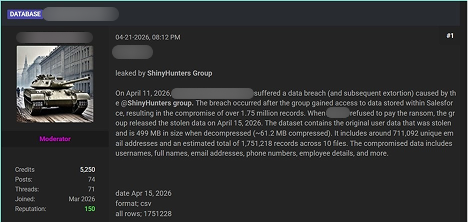
The shift to encryptionless extortionIn 2025, the share of ransoms paid dropped to 28%. As a response to this, one of the developments in the 2026 landscape is the growing prevalence of extortion incidents in which no file encryption takes place at all. Instead, attackers leave out the “ware” in “ransomware” and focus on extracting sensitive data and leveraging the threat of public disclosure as their primary means of extortion. ShinyHunters is an excellent example of such a group, using a data leak site to publicize its victims.
By avoiding encryption, attackers may aim at reducing the likelihood of immediate detection, shortening the duration of the attack, and eliminating dependencies on stable encryption routines. Often, this model is used alongside traditional tactics in so-called double extortion schemes, but an increasing number of campaigns rely exclusively on data theft.
For victims, this shift fundamentally changes the nature of the risk. While backups remain effective against encryption-based disruption, they provide no protection against data exposure, regulatory consequences, and reputational damage. Ransomware is therefore evolving from a business continuity issue into a broader data security and compliance challenge.
Industrialization of initial access (Access-as-a-Service)The ransomware ecosystem continues to evolve toward a highly industrialized and specialized model, with initial access remaining as one of its most critical components. In 2026, many ransomware operators keep relying on IABs (initial access brokers), a network of intermediaries who supply pre-compromised access to corporate environments, aiming to no longer perform full intrusions themselves.
This “access-as-a-service” model is fueled by credential theft operations, and the widespread availability of compromised accounts harvested through infostealers and phishing campaigns.
The primary access vectors offered for sale have not changed: RDP, VPN, and RDWeb are still the top access vectors. Consequently, remote access infrastructure remains the primary attack surface for initial access sales. In response to the measures against public exposure of RDP access points to the internet, attackers are now targeting RDWeb portals, which are frequently vulnerable and occasionally inadequately safeguarded.
The result is a threat landscape where unauthorized access is increasingly commoditized, and the barrier to launching ransomware attacks declines. This means that preventing initial compromise is only part of the challenge; equal emphasis must be placed on detecting misuse of legitimate credentials and limiting lateral movement within already-breached environments.
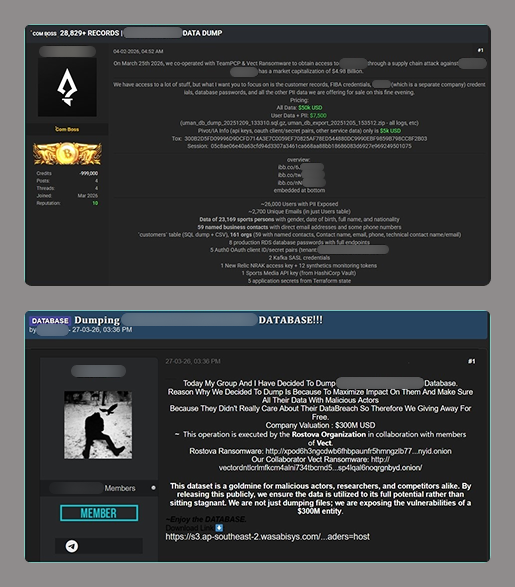
Ransomware developments on the dark webTelegram channels and underground forums increasingly function as platforms for the distribution and sale of compromised datasets and access credentials including those that were obtained as a result of ransomware attacks.
Advertisements posted on these resources typically include the nature of the access, a description of the exfiltrated or compromised data, price terms, and contact information for prospective buyers. In addition, some malicious actors mention their collaboration with other ransomware groups. Lesser-known gangs can use this name-dropping to promote themselves
Multiple threat actors not related to ransomware groups distribute datasets downloaded from ransomware blogs on underground forums and Telegram. By re-publishing download links and files, they spread compromised data as well as information on the ransomware attack within the community.
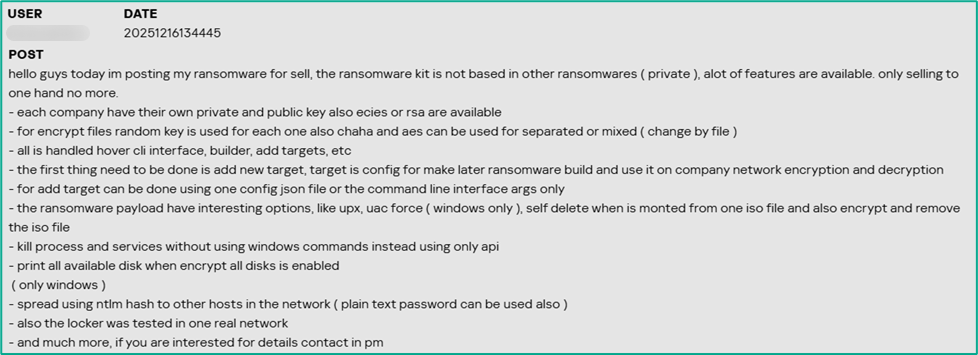
The ransomware itself is also sold or offered for subscription on the dark web platforms. The sellers underscore the uniqueness of their malware, as well as its encryption and defense evasion features.
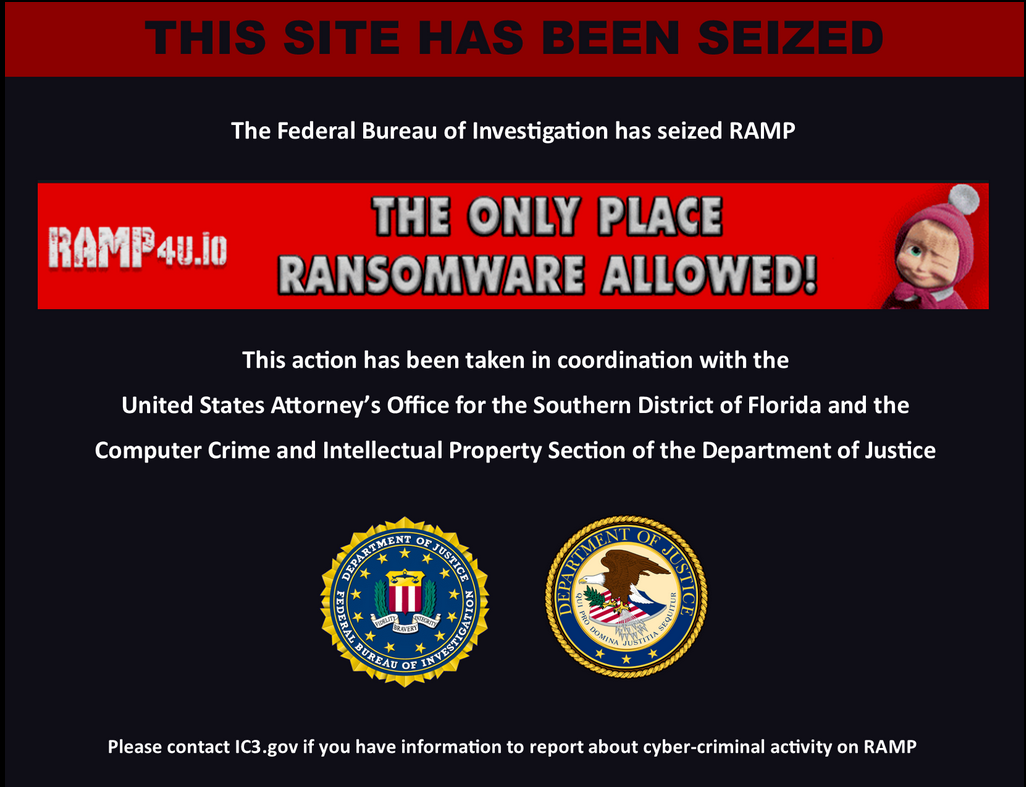
Law enforcement actionsLaw enforcement agencies are actively shutting down dark web platforms and ransomware data leak sites. A major underground forum, RAMP, which also functioned as a platform for threat actors to advertise their ransomware services and publish service‑related updates, was seized by authorities in January 2026. Another underground forum, LeakBase, where malicious actors distributed exfiltrated and compromised data, was seized in March 2026. In 2025, law enforcement agencies seized well-known forums like Nulled, Cracked, and XSS. Also in 2025, the DLSs of BlackSuit and 8Base ransomware groups were seized. These takedowns cause inconvenience to ransomware coordination, specifically for initial access brokers and affiliates, though similar forums are expected to fill the void over time.
Top ransomware groups in 2025RansomHub’s sudden dormancy in 2025 marked a shift, and Qilin became the dominant player from Q2 onward. According to Kaspersky research, Qilin was the most active group executing targeted attacks in 2025.
Each group’s share of victims according to its data leak site (DLS) as a percentage of all reported victims of all groups during the period under review (download)
Qilin stands out as one of the fastest-growig and dominant RaaS platforms. Its combination of high-volume operations and structured affiliate model positions it as a central player in the current ecosystem.
Clop, the second most active group in 2025, is distinguished through its large-scale, supply-chain-style attacks, exploiting widely used file transfer and enterprise software to compromise hundreds of victims simultaneously. This one-to-many approach sets it apart from more traditional, single-target campaigns.
Third place is occupied by Akira, which remains notable for its consistency and operational stability, maintaining a steady stream of victims without major disruption. Its ability to sustain activity over time makes it one of the most reliable indicators of baseline ransomware threat levels.
Although no longer active, RansomHub stands out for its rapid rise and equally rapid disappearance in 2025, highlighting the volatility of the RaaS market. Its shutdown created a vacuum that significantly reshaped affiliate distribution across other groups.
DragonForce is also notable – not just for its own operations, but for its broader influence within the ransomware ecosystem, including reported involvement in infrastructure conflicts and possible links to the disruption of competing groups. Thus, the group claims that RansomHub “has moved to their infrastructure.” This positions it as more than just an operator and potentially an ecosystem-level actor.
New actors in 2026While emerging actors generally operate on a smaller scale, they provide insight into the continuous churn and low barrier to entry within the ransomware ecosystem.
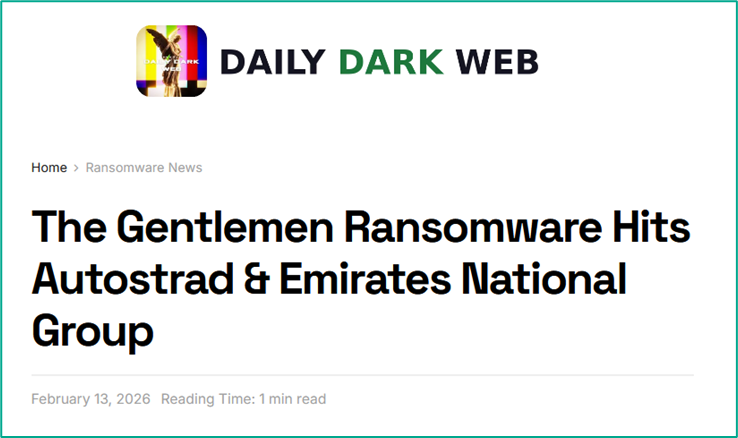
The Gentlemen group caught our attention in early 2026, as they managed to attack a significant number of victims over a short time. This actor is also notable for reflecting a broader shift toward professionalization and controlled operations within the ransomware ecosystem. Unlike many emerging groups that rely on opportunistic attacks and inconsistent leak activity, The Gentlemen demonstrate a more deliberate approach: structured intrusion workflows, selective targeting, and measured communication with victims. This signals a move away from chaotic, high-noise campaigns toward predictable, business-like execution models that are easier to scale and harder to disrupt. Their TTPs include the massive exploitation of hardware very common on big corporations, such as FortiOS/FortiProxy, SonicWall VPN, and Cisco ASA appliances. The group might be comprised of professional cybercriminals who left other prominent groups.
The group is also notable for its emphasis on data-centric extortion strategies, often prioritizing exfiltration and leverage over purely disruptive encryption. This aligns with one of the defining trends of 2026: ransomware evolving into a form of data breach monetization rather than just system denial. By focusing on controlled pressure and reputational risk instead of immediate operational damage, The Gentlemen exemplify how attackers are adapting to lower ransom payment rates and improved backup practices among victims.
Some other groups to take note of in 2026:
- Devman appears to be an emerging actor with limited but growing activity, likely leveraging existing tooling rather than developing custom capabilities.
- MintEye hasn’t been very active yet, with just five known victims, suggesting opportunistic campaigns without a consistent operational tempo.
- DireWolf is associated with small-scale, targeted attacks, though its overall footprint remains relatively limited compared to larger RaaS groups.
- NightSpire demonstrates characteristics of an amateur group, such as mistakes during its operations, uncommon communication channels with the victims, and sometimes giving them insufficient time to pay up. Although they both encrypt and leak data, they prioritize publication rather than encryption.
- Vect shows low-volume activity. It is yet unclear whether they use a completely new codebase or are rather a rebrand of an existing group.
- Tengu is a less prominent actor, with limited public reporting and no clear distinguishing tactics beyond standard extortion models.
- Kazu appears to be created by ransomware operators previously engaged with multiple other groups. As of now, they don’t stand out for scale or technique.
Although there is little to say about these groups at the time of writing this report, each of them may be equally likely to disappear from the threat landscape or grow into a prominent threat. That’s why it’s important to track them from their early days. Moreover, collectively, these groups illustrate how dynamic the ransomware landscape is, with new entrants constantly replenishing it.
Conclusion and protection recommendationsDespite the growing effort by law enforcement agencies across the globe to seize and disrupt dark web platforms and threat actor infrastructures, ransomware operations remain stable, with new groups quickly taking the place of those who went silent. In 2026, we see a shift towards encryptionless extortion, with data leaks increasingly becoming the main threat to target organizations. At the same time, data encryption is also upgrading to the next level with the emergence of post-quantum ransomware.
To resist the evolving threat, Kaspersky recommends organizations:
Prioritize proactive prevention through patching and vulnerability management. Many ransomware attacks exploit unpatched systems, so organizations should implement automated patch management tools to ensure timely updates for operating systems, software, and drivers. For Windows environments, enabling Microsoft’s Vulnerable Driver Blocklist is critical to thwarting BYOVD attacks. Regularly scan for vulnerabilities and prioritize high-severity flaws, especially in widely used software.
Strengthen remote access: RDP and RDWeb connections should never be directly exposed to the internet, only through VPN or ZTNA (Zero Trust Network Access). It’s highly recommended to adopt multi-factor authentication on everything; the architecture may require continuous authentication for access, as one valid credential captured is enough to cause a breach. Monitoring the underground for stolen employee credentials is essential. Audit open ports across the entire attack surface. The adoption of the “Principle of Least Privilege” (PoLP), where users, systems, or processes are granted only the minimum access rights, such as read, write, or execute permissions, necessary to perform their specific job functions, is highly recommended.
Strengthen endpoint and network security with advanced detection and segmentation. Deploy robust endpoint detection and response solutions such as Kaspersky NEXT EDR to monitor for suspicious activity like driver loading or process termination. Network segmentation is equally important. Limit lateral movement by isolating critical systems and using firewalls to restrict traffic. Complete and immediate offboarding for employees is necessary as well as periodic permission reviews, with automatic revocation of unused access. Sessions with complete logging for privileged accounts are more than necessary. Monitoring the traffic divergence to new sites or even to legitimate endpoints can help the defenders to spot a new insider threat.
Invest in backups, training, and incident response planning. Maintain offline or immutable backups that are tested regularly to ensure rapid recovery without paying a ransom. Backups should cover critical data and systems and be stored in air-gapped environments to resist encryption or deletion. User education is essential to combatting phishing, which remains one of the top attack vectors. Conduct simulated phishing exercises and train employees to recognize AI-crafted emails. Kaspersky Global Emergency Response Team (GERT) can help develop and test an incident response plan to minimize potential downtime and costs.
The recommendation to avoid paying a ransom remains robust, especially given the risk of unavailable keys due to dismantled infrastructure, affiliate chaos, or malicious intent. By investing in backups, incident response, and preventive measures like patching and training, organizations can avoid funding criminals and mitigate the impact.
Kaspersky also offers free decryptors for certain ransomware families. If you get hit by ransomware, check to see if there’s a decryptor available for the ransomware family used against you.
Kategorie: Hacking & Security, Viry a Červi
Arm’s software chief sees human language as the new way to program
If you haven’t heard of Arm, you haven’t been paying attention to how ubiquitous the chipmaker has become. Arm’s processor designs power Macs, iPhones, and every other major smartphone line. Queries made through ChatGPT, Gemini, or Claude pass through an Arm-based chip at some point.
For more than 40 years, Arm’s focus was on chip design. Major device and AI chip makers then licensed those designs and turned them into hardware.
But the company’s focus is changing: Arm is now making hardware using its own AGI CPU, which OpenAI and Meta will use and which will allow the chipmaker itself to compete with the likes of Apple, Intel, Nvidia, Amazon and Google.
Arm’s envisions its new Performix software suite using “recipes” and AI insights to help engineers identify suspect code and CPU hotspots.
Alex Spinelli, who leads Arm’s software initiatives as senior vice president for AI and developer platforms, is as AI-native an engineer as you’ll find; he played a central role in the TensorFlow stack used to launch Gemini and was on the team at Amazon that developed Alexa.
Computerworld sat down with Spinelli to get his views about the ongoing shift in software and engineering driven by AI, and how engineers can keep up with the fast pace of change.
Alex Spinelli, senior vice president for AI and developer platforms at Arm.
Arm
How does your group support Arm’s shift to building its own hardware? “Our mission is to enable application developers to take full advantage of Arm hardware the day it’s released. That’s the exciting part of the AGI CPU.”
How is software engineering itself changing? “What we’ve seen through computing, going back 60, 70 years, is a gradual progression to a higher order abstraction. You started with punch cards, assembly, low-level languages, higher-order languages, interpreted languages. We’re entering the era of human language becoming the language of programming…. Now, English is the highest level language.
“Programming doesn’t go away, engineering doesn’t go away. The way we express it is going away.”
Where does this transition leave today’s software engineer? “Engineering is moving to a much greater blending of technical product management thinking, design thinking, and architecture thinking in a different programming model where I’m using natural language to create my programs.
“As an engineer, embracing and understanding where you sit in that tool chain becomes really important. Where AI rubber really hits the road is with agents. Agents use a lot of AI and agents are software.”
How does this engineering structure work in this new model? “Thinking about how I structure that application stack requires a lot of experience and know-how.
“[For example], I have an OpenClaw instance installed in the cloud that I use to build out my hobby and side projects. I have 15 or so small models, embedding models, SLMs — all running on CPU within my agent application framework.
“Then I’m selectively calling out to different foundation models, fast, low-cost ones like Haiku or Flash, and foundation models like ChatGPT 5.5 for the most important reasoning problems. That is engineering.”
What do you tell engineers on your team about the future of their careers? “I have hundreds of software engineers on my team. The future of engineering is embracing this new model and not trying to fight it.
“For new entrants out of college and [with] master’s degrees, I don’t know what the right mix of learning is yet. AI tooling is a power tool for mid-to-senior engineers to embrace.
“If you look at the biggest technical innovations in the world — electricity, assembly line, railroad — they’re automations. When you radically reduce the cost of production of something, humans in history have not used less of it. People are finding new roles and new businesses are launching.
How do you view the “death of the engineer” predictions? “I’ve always had a chip on my shoulder because I didn’t do a [computer science degree. That drove me to go deep…into assembly, into how memory works. Even as LLMs become the new compiler that processes natural language into tool calls and Java or Python, those fundamentals matter.
“Think of an LLM like the smartest, most informed, overconfident, eager, arrogant recent MIT master’s grad. They know every language, but they would need a senior engineer to guide and help them. The importance of great engineers has been elevated. AI needs that guidance.
“We also need to dust off agile skills. Now we’re shifting back to applications and agents, where things change every week.”
Should new developers learn the tools first, or go to school for fundamentals? “I came out at a time when so much was changing. I went deep. I started looking at assembly. That deep understanding, especially in an era of high-level languages — [with] English … the highest level language — is always valuable.
“Even when I’m working with my agent, really knowing how a computer works has never not been valuable. You might never write C++ or C code, but fundamentally understanding what’s happening is really important. There are mistakes, there are corners cut. AI loves to roll its own libraries and not use tried-and-true best practices that understand the quirks of a particular system.
“Do you need formal education and training? I don’t know. There are so many ways to educate yourself if you’re motivated. Go deep, understand how computers work, understand what a compiler is. It’ll pay dividends.”
What are the biggest pitfalls you see for engineers today? “Cost is a big one. Tokens are expensive. In my OpenClaw, when I had it configured wrong, I got a bill for $500 in one weekend, and I was like, what the hell happened here? There’s no free lunch. Rents will be extracted when they’re available in economics.
“Security is another major pitfall. The challenges are less inherent to the frameworks themselves and more about what people are doing with them…, putting passwords and tokens in clear text. You see a response from the industry like NemoClaw, which is really a layer on top from Nvidia to push security policies.
“My advice to enterprises: don’t try to standardize too quickly across one model, but don’t allow the full Wild West either. You need to institutionalize your policies into your agent frameworks.”
What does the future of the AI-built world look like? “We’re moving toward fast software, similar to fast fashion. When you radically reduce the cost of production, humans in history have not used less of [what’s being produced].
“You’re going to have disposable software. We’re going to build things quickly. If they don’t quite work, that’s okay. The agent remembers how to do it. I’ll just rebuild it.
“But we have to accept a different kind of failure. Things might fail hilariously or catastrophically, and then we’ll fix it in an automated way.
“My target is that every engineer has an expert sidecar agent and a swarm of agent developers they can lean on. You use Claude Code or Codex or Gemini to spin up agents, each with a specific role…designer, architect, coder, tester. Research says when you bind an agent to a role with procedures, policies, and standards around it, and you allow those agents to interact, the outputs are orders of magnitude higher quality than leaning on a single agent.
“We’re looking at literally 10xing the ability for our engineers to produce. We’re not looking for cost savings. We’re looking to do more, because there’s so much more to do.
How do you make projections when AI changes every week? “You need diverse opinions, people with different ways of thinking. The tried-and-true…component-based, modular-based architectures…user-centered design, service-oriented design…are super important. You need the ability to flex and bend.
“I subscribe to: Think ahead, but don’t future proof, because often you’re going to assume something that needs to change. The pace is new.
“We almost went away from agile in the industry. Resurfacing those principles…ends up being pretty important now because stuff’s changing.”
Kategorie: Hacking & Security
OpenAI Launches Daybreak for AI-Powered Vulnerability Detection and Patch Validation
OpenAI has launched Daybreak, a new cybersecurity initiative that brings together frontier artificial intelligence (AI) model capabilities and Codex Security to help organizations identify and patch vulnerabilities before attackers find a way in using the same issues.
"Daybreak combines the intelligence of OpenAI models, the extensibility of Codex as an agentic harness, and our partners across
Kategorie: Hacking & Security
OpenAI Launches Daybreak for AI-Powered Vulnerability Detection and Patch Validation
OpenAI has launched Daybreak, a new cybersecurity initiative that brings together frontier artificial intelligence (AI) model capabilities and Codex Security to help organizations identify and patch vulnerabilities before attackers find a way in using the same issues.
"Daybreak combines the intelligence of OpenAI models, the extensibility of Codex as an agentic harness, and our partners across Ravie Lakshmananhttp://www.blogger.com/profile/[email protected]
Kategorie: Hacking & Security
macOS 26.5 především opravuje chyby. Některé z nich pomohla odhalit AI
Apple včera večer vydal nové verze operačních systémů, došlo i na pátou desetinkovou aktualizaci desktopového macOS 26 Tahoe. Jde o jedno z těch nudnějších vydání. Ač má balík skoro devět gigabajtů, nepřináší žádné viditelné funkční novinky. Ke změnám docházelo jen na pozadí.
Firma upravila ...
Kategorie: IT News
- « první
- ‹ předchozí
- …
- 26
- 27
- 28
- 29
- 30
- 31
- 32
- 33
- 34
- …
- následující ›
- poslední »